
How to Identify Storm Damage on Commercial Roofs After Severe Weather

Dark cloudy sky with lightning over building. Stormy weather
Atlanta storms can bring heavy rain, hail, wind, and flying debris, especially during spring and summer. Even when a building looks fine from the ground, a commercial roof may still have damage that needs attention.
For building owners and property managers, identifying storm damage early is less about reacting to a leak and more about preventing one. Small issues can turn into expensive repairs if they are not addressed before the next round of severe weather.
Here’s what to look for after a major storm.
Storm Damage Is Not Always Obvious Right Away
Commercial roofs are often flat or low-slope, which means damage can be easy to miss. Hail may leave small punctures or weaken the roof membrane. Wind can loosen flashing, lift seams, or move debris across the roof surface.
Even if there is no active leak inside the building, the roofing system may still have vulnerable areas that need to be checked.
Check the Roof Membrane
The membrane is one of the most important parts of a commercial roof. After severe weather, look for punctures, tears, lifted seams, blistering, soft spots, or areas where water is starting to pond.
For TPO, PVC, EPDM, and modified bitumen roofs, hail damage may not always look dramatic. Small impact marks or weakened areas can still affect how the roof performs during future storms.
Pay Attention to Flashing and Penetrations
Many commercial roof leaks begin around flashing, edges, walls, curbs, drains, vents, skylights, and rooftop equipment.
After a storm, loose flashing, cracked sealant, separated seams, or gaps around penetrations should be taken seriously. These areas are especially vulnerable because they protect the transitions where water is most likely to enter.
Look Around Rooftop Equipment
HVAC units, exhaust fans, vents, and other rooftop equipment should also be inspected after severe weather. Wind and hail can damage metal components, loosen panels, or affect the seal around equipment curbs.
Even if the equipment is still working, the roofing materials around it may have shifted or weakened. A small opening around rooftop equipment can turn into a leak during the next heavy rain.
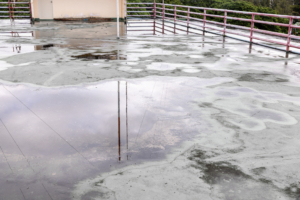
Old flat roof is ponding water and leakage after rain. Blistering flat roof.
Watch for Drainage Problems
Atlanta storms can drop a lot of rain in a short amount of time. After the storm passes, water should be able to drain properly from the roof.
Standing water, clogged drains, blocked scuppers, or debris buildup can all create problems. When water sits on the roof, it adds weight, speeds up material deterioration, and increases the risk of leaks.
Check Inside the Building Too
Storm damage may show up inside before it is noticed on the roof. New ceiling stains, dripping water, musty smells, damp flooring, or bubbling paint can all point to a roofing issue.
Water does not always enter directly above the visible stain, so it is important to have the source properly inspected instead of guessing where the leak started.
When to Call a Professional
If your building experienced hail, high winds, heavy rain, or flying debris, it is a good idea to schedule a professional commercial roof assessment.
This is especially important if you notice membrane damage, loose flashing, ponding water, damaged rooftop equipment, or any signs of moisture inside the building. A professional inspection can help document the condition of the roof, identify hidden damage, and recommend the right next steps.
Protect Your Building Before the Next Storm
Storm damage does not always become an emergency right away. However, small roofing problems rarely stay small for long.
If you suspect commercial storm damage or need commercial hail damage roof repair, The Roof Clinic can help assess your roof and determine what needs attention. Contact us today to schedule your complimentary commercial roof assessment, or conveniently book your appointment online.